



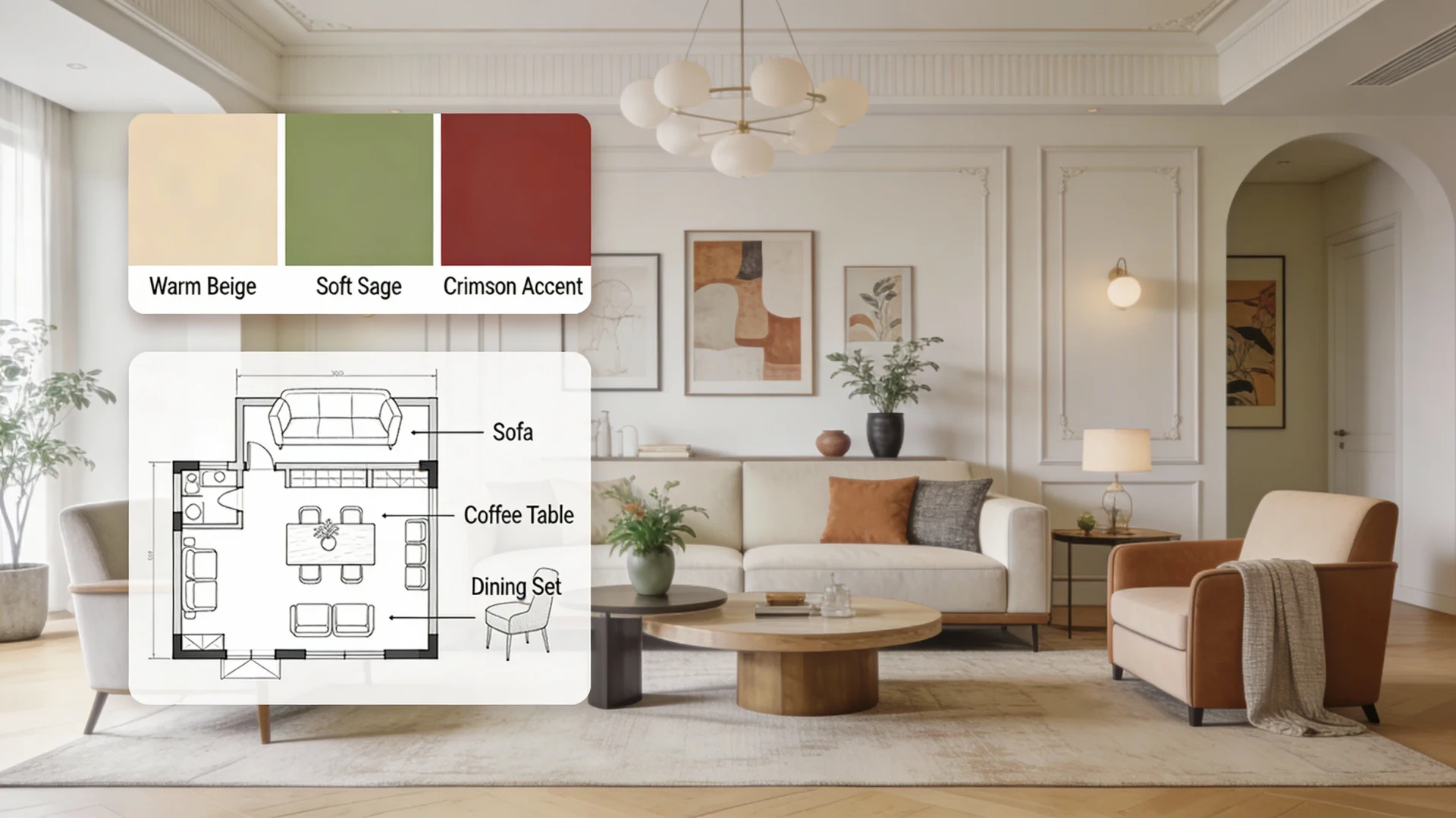
Interior Design: Beginner's Blog Tutorial
Good interior design is mostly decisions, and only a little bit shopping. This guide shows you how to make a room genuinely work: define what the room is for, plan the layout and walking paths, build lighting in layers, keep colour under control, and clear out before you buy anything new. By the end you will have a method you can apply to any room, on any budget, without hiring anyone.
Start with function, not looks
Before you think about colours or furniture, write one sentence that says what the room must do. "This is where two adults eat, work on laptops in the afternoon, and host four people once a month" is a design brief. "I want it to feel cosy" is not, yet, because cosy is the result of decisions, not a decision itself.
Then list the activities in order of frequency. A living room used daily for reading and twice a year for parties should be designed for reading. Rooms fail when they are arranged for the rare case: six dining chairs squeezed in for guests who come at Christmas, while the everyday desk sits in the dark corner. Design for the ordinary Tuesday and improvise for the party.
Common pitfall: copying a photo. Magazine rooms are staged for a camera standing in one spot, with no coats, cables or toddlers. Steal details from photos by all means, but let the function sentence overrule them.
Plan the layout and the walking paths
Measure the room and sketch it on paper or in any free floor-plan app, including doors, windows, radiators and sockets. Then draw the routes people actually walk: door to sofa, sofa to kitchen, desk to bookshelf. These paths need roughly 80 to 100 centimetres of clear width to feel comfortable; main routes more, minor ones can be tighter.
A few layout rules earn their keep in almost every room:
- Keep walking paths straight and unbroken. If you brush the same chair corner every day, the chair is in the wrong place, however good it looks there.
- Anchor the main seating to the room's focal point: the window, the fireplace, or the conversation, and only then to the television.
- Pull furniture off the walls where the room allows it. A sofa floated 20 centimetres from the wall with a lamp behind it makes a room feel considered rather than lined up.
- Match furniture scale to the room. One properly sized sofa beats a suite of small pieces that reads as clutter.
- Test big changes with masking tape on the floor before you move or buy anything heavy.
Build lighting in three layers
A single ceiling light makes every room look like a waiting area. Aim for three layers, each on its own switch or plug so you can mix them:
- Ambient: the general light that lets you cross the room safely. Ceiling fittings, ideally dimmable.
- Task: focused light where work happens. A reading lamp by the chair, a desk lamp, strips under kitchen cabinets.
- Accent: small, low light that gives the room depth in the evening. A lamp on a bookshelf, a picture light, a candle-height glow in a dark corner.
Two practical notes. First, keep colour temperature consistent within a room; warm white around 2700K suits living spaces, and one cool-white bulb in a warm room will always look wrong. Second, evening comfort comes from several low sources rather than one bright one. Three small lamps at seated eye level or below change a room more than any cushion ever will.
Use colour with restraint
Colour goes wrong through quantity, not choice. Almost any colour works in a room; five competing colours do not. A workable discipline:
- Pick a base neutral for most surfaces: walls, large furniture, curtains.
- Add one secondary colour that appears in a few medium pieces, such as an armchair or a rug.
- Allow one accent that shows up in small, easily changed items: cushions, a throw, a vase.
Repeat each colour at least twice in the room so it looks intentional rather than accidental. Test paint on the actual wall with a sample pot and look at it in morning and evening light before committing; colours shift more with daylight than the chart suggests. And remember that wood tones, metals and plant greens count as colours too. If a room feels busy but you cannot say why, count the materials before you count the ornaments.
Declutter before you buy
Most rooms do not need more things; they need fewer things arranged better. Before spending anything, take everything movable out of the room, or at least off the surfaces, and bring items back one at a time only if they serve the function sentence from the first step. Whatever is left after a week in a box is a candidate to sell, donate or store.
This order matters for the budget as well. Decluttering is free, and it frequently solves the problem you were about to spend money on. The room that "needs more storage" often just needs less stuff, and the "too small" living room is usually a normal-sized room with an oversized furniture habit. Only once the room is down to what it needs can you see what is genuinely missing.
Small-budget wins that change a room
When you do spend, these moves give the most visible result per unit of effort:
- Paint. The cheapest transformation there is. One weekend, one colour, done properly with filled holes and clean edges. Our home repairs guides cover the prep.
- A larger rug. Small rugs float and fragment a room. A rug big enough for the front legs of the sofa and chairs to sit on ties the seating together.
- Curtains hung high and wide. Mount the rail close to the ceiling and let panels fall to the floor. The window looks bigger and the ceiling higher.
- Lamp bulbs and shades. Warmer, dimmer bulbs and fabric shades cost little and fix the harshness most rooms suffer from.
- Second-hand and renovated pieces. A solid old chest of drawers, cleaned and waxed or repainted, outlives most new flat-pack at a fraction of the price.
- One good plant. A single healthy floor plant does more than a shelf of struggling small ones.
Spread purchases over months rather than buying a room in one order. Rooms assembled slowly, around real use, are the ones that still work in five years.
Where to go next
- Furniture renovation: turn second-hand finds into the best pieces in the room.
- Home repairs: fill the holes and fix the squeaks before the paint goes on.
- Gardening and outdoor: apply the same function-first thinking to a balcony or garden.
Stuck on a step, or wrestling with a room that refuses to work? Write to the desk and tell us about it.
Comments
No comments yet. Be the first to share your thoughts.