



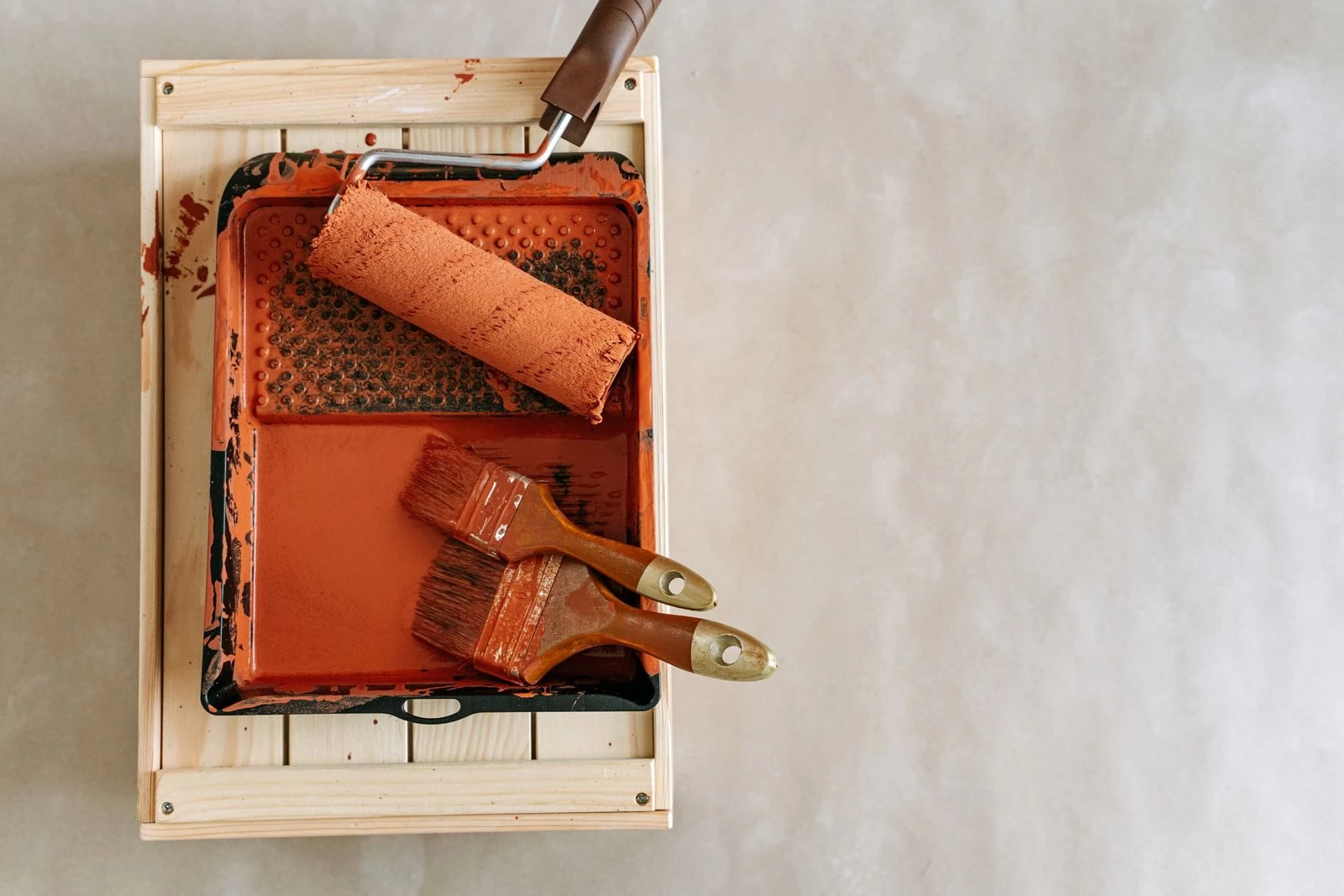
Painting Furniture So It Lasts
Painted furniture that chips at the edges, peels on the seat, or stays faintly tacky months later has almost never been let down by the paint. It was let down by what happened before the first coat, and by not waiting long enough afterwards. The work is mostly preparation, which is the part everyone wants to skip.
Find out what you are painting
Bare or previously oiled wood, factory-finished veneer, laminate over chipboard and old gloss paint all behave differently, and the difference decides the primer.
Two quick tests. Rub a hidden area with a cloth dampened with methylated spirit: if colour transfers, the existing finish is likely shellac or a water-sensitive coating. Press a fingernail into an inconspicuous spot: laminate is hard and uniform, real wood dents.
If the piece may predate the 1980s and has old paint you plan to sand, take the lead question seriously. Test kits are cheap, and if the result is positive, the safe routes are to paint over intact old paint without sanding it, or to get advice rather than making dust.
Clean before anything else
Furniture carries grease, polish and silicone from years of spray polish. Sanding a dirty surface pushes the contamination into the scratches, where it stops paint sticking in exactly the places you prepared.
Wash with a degreaser, sugar soap or a strong detergent solution, then rinse and let it dry properly. Kitchen and dining pieces need this most. If a piece has been polished with silicone products, expect to repeat the wash, because silicone is what causes the small round craters people call fish-eye.
Sand for grip, not to bare wood
Unless you are stripping back for a clear finish, the goal is a dull, evenly scratched surface, not bare timber. A medium grit knocks back gloss and levels damage; finish with a finer grit so the scratches are shallow enough to disappear under paint.
Fill dents and old screw holes with a filler suited to the material, let it harden fully, then sand flush. Filler that is still soft in the middle will sink later and show as a dimple through the paint.
Vacuum the dust, then wipe with a barely damp cloth or a tack cloth. Dust left on the surface is the single most common reason a finish feels gritty.
Primer is where the decision is made
Primer does three jobs: it sticks to a difficult surface, it stops stains bleeding through, and it gives the topcoat something uniform to sit on. Which one you need depends on the piece.
- Bonding primer for laminate, melamine, varnished or glossy surfaces. This is the one that makes painting a veneered cabinet possible at all.
- Stain-blocking primer, usually shellac-based, for woods that bleed tannin such as oak, mahogany and pine knots, and for anything with water or smoke staining. Skip it on those woods and a pink or brown shadow will appear through white paint, sometimes weeks later.
- Standard wood primer for bare, well-behaved softwood.
Prime thinly and evenly, let it dry for the time on the tin rather than the time you have, and give it a very light sand before the topcoat.
Thin coats, and the right tool
Two or three thin coats always beat one thick one. Thick paint skins over while the underneath is still soft, which is how you get a finish that dents under a fingernail a week later.
For a smooth finish on flat panels, a small foam or microfibre roller leaves less texture than a brush; lay off the last pass in one direction while the paint is still wet. On mouldings and edges, a good synthetic brush for water-based paint, and long strokes rather than dabbing.
Respect the recoat window on the tin. Going back over paint that is half-dry drags it and leaves ridges that sanding will not fully remove.
Dry is not cured
This is the step that ruins otherwise good work. Water-based paints are touch dry in an hour and fully hardened only after a much longer period, often two to four weeks depending on the product, temperature and humidity.
During that time the film is soft. Stacking books on a freshly painted shelf, putting cushions on a painted bench, or closing a cabinet door against its frame will leave marks or glue the surfaces together. Reassemble gently, leave doors ajar for a few days, and put nothing heavy on horizontal surfaces for at least a fortnight.
For a tabletop, a chair seat or anything that takes daily wear, add a clear protective topcoat over the paint once it is dry, and then let that cure too.
The mistakes that cause the call-back
- Painting in a cold or damp room. Most finishes need a temperature range; below it they never harden properly.
- Skipping the degrease on a kitchen piece.
- No stain-blocking primer on oak or knotty pine.
- One thick coat instead of two thin ones.
- Reassembling and loading the piece the next day.
Get those six things right and a painted piece survives ordinary family use for years. Get the preparation wrong and no paint, however expensive, will save it.
Comments
No comments yet. Be the first to share your thoughts.