



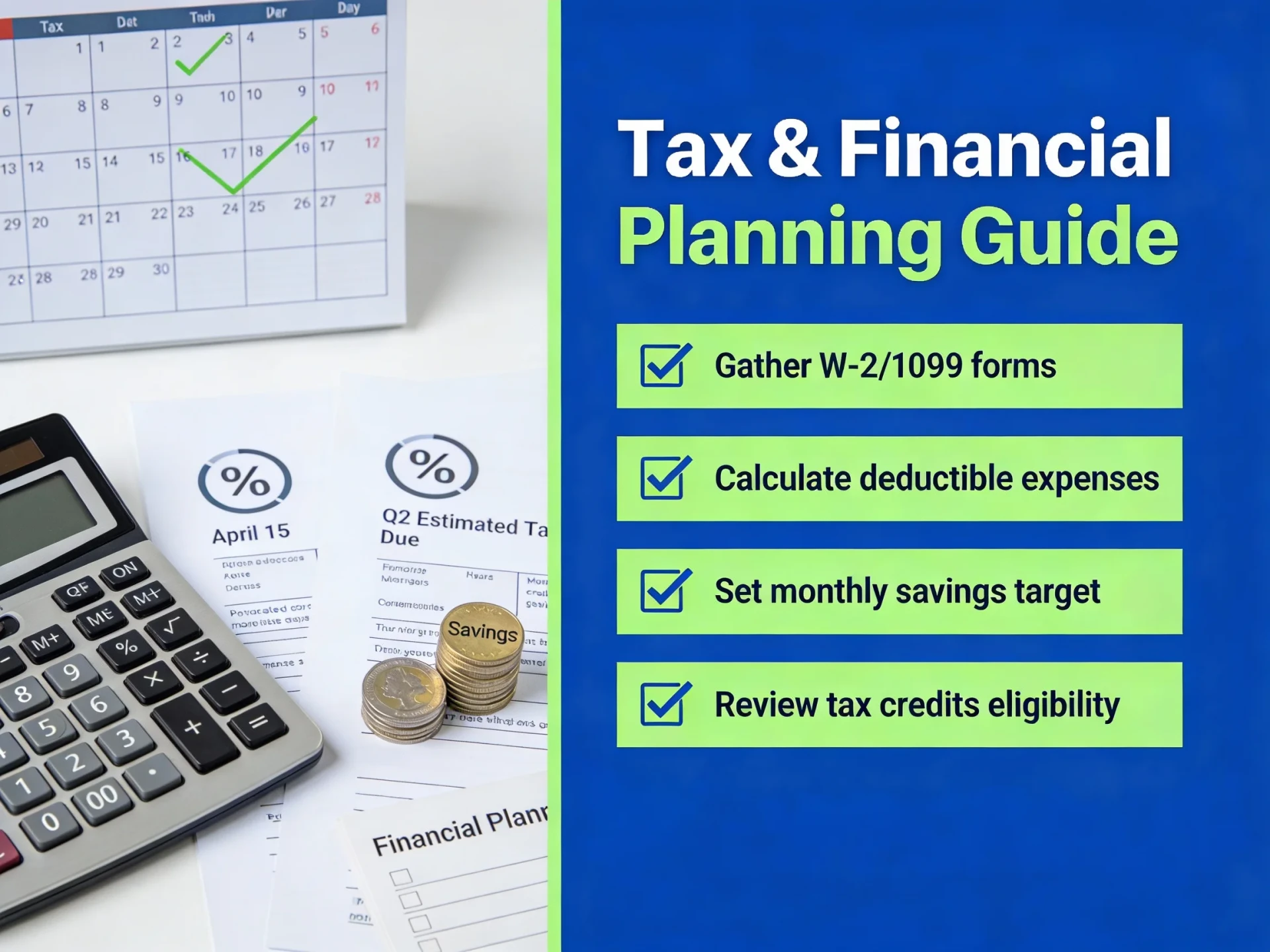
Tax & Planning: Calm Basics for Getting Organized
Tax stress is mostly self-inflicted: not by owing money, but by facing deadlines with a shoebox of receipts and no idea where anything is. This guide covers the calm basics of tax and financial planning that work in any country: knowing your deadlines, keeping records as you go, separating business from private money, and recognizing the point where paying a professional costs less than not paying one. One thing to be clear about first: tax rules, rates, and dates differ per country and change over time, so everything here is deliberately generic. For the numbers that apply to you, use your own tax authority's website or a qualified adviser; this article is education, not tax advice.
Why calm beats clever
Most of the benefit of "tax planning" for ordinary people and small business owners does not come from clever structures. It comes from being organized: filing on time, claiming the deductions you are legitimately entitled to because you kept the receipts, and never paying penalties for things you simply forgot. Aggressive tricks you found online carry risk and often do not apply to your situation; boring administration pays reliably. Build the boring system first. If sophisticated planning ever becomes relevant, it will be a conversation with a professional, on top of clean records, never instead of them.
Know your deadlines
Every tax system runs on dates: filing deadlines, payment deadlines, registration deadlines, and often prepayment or estimated-tax moments through the year. Missing them is the most avoidable cost in the whole system, because penalties and interest buy you nothing.
- Make the list once. Look up, for your country and situation, which returns you must file and when: personal income tax, and if you run a business, whatever sales tax or VAT-style filings and payroll obligations apply.
- Put every date in your calendar with two reminders: one a month ahead to gather documents, one a week ahead to file. The month-ahead reminder is the one that removes the panic.
- Know the difference between filing and paying. In many systems these have separate deadlines, and an extension to file is often not an extension to pay. Check how yours works before you rely on either.
- When in doubt, file on time anyway. In many places filing something on time and correcting it later is treated far more gently than filing late. Verify how your system handles corrections, and let deadlines win.
Keep records as you go
The difference between a miserable tax season and a dull one is decided in the other eleven months. Records kept as you go take minutes; records reconstructed in April take weekends. A minimal system:
- One place for documents. A folder per tax year, digital or paper, where every payslip, invoice, receipt, bank statement, and official letter lands the week it arrives. The habit matters more than the tool.
- Photograph paper receipts immediately. Thermal paper fades; a photo in the right folder does not.
- A simple running ledger if you have any business income: date, description, amount in or out, and a category. A spreadsheet is fine. Update it on a fixed slot, ten minutes every Friday, so it never becomes an archaeology project.
- Write down the why. For anything unusual, a one-line note ("laptop, 60 percent business use") made today beats your memory in two years, which is roughly when questions arrive if they arrive at all.
- Keep records as long as your rules require. Retention periods vary by country and by type of record, and several years is common, so find your number and keep everything at least that long.
Good records do double duty: they make filing fast, and they are your evidence if the tax authority ever asks. The burden of proof for a deduction usually sits with you, and a claimed expense without a receipt is a donation waiting to be reversed.
Separate business and private money
If you have any income outside a salary, from freelancing to a small side business, mixing it with your private money is the single habit that causes the most administrative pain later. The fix costs one afternoon:
- Open a separate bank account for the business activity, and run every business payment in and out through it. Suddenly your bookkeeping is mostly reading one statement.
- Pay yourself deliberately. Move money from the business account to your private account as an explicit transfer, rather than paying groceries from business funds whenever it is convenient.
- Set aside tax on arrival. Every time income lands, move a fixed share into a separate pot you do not touch. Which share is right depends on your country and bracket, so estimate it once, deliberately, and adjust after your first real tax bill. The mechanism is the point: the money for the bill exists before the bill does.
- Keep mixed purchases rare and documented. When something is genuinely part business, part private, note the split when you buy it, using whatever method your rules accept.
Separation also gives you honest information. A business whose profit is invisible inside a personal account tends to feel more profitable than it is.
Plan the year, not just the return
Once records and deadlines are under control, a light yearly rhythm keeps you ahead instead of behind:
- Quarterly, half an hour: is the ledger up to date, is the tax pot in line with income so far, are any prepayments due?
- Before year-end, one evening: check whether any deadlines-sensitive choices apply to you while there is still time to act, since many options close when the year does. What those are depends entirely on your country's rules, which is exactly the question for the official guidance or an adviser.
- After filing, fifteen minutes: note what was annoying to find, and fix that one thing in your system for next year.
This rhythm is deliberately small. A plan you actually repeat beats an impressive one you abandon by March.
When a professional pays for itself
Plenty of people with one employer and simple finances can file on their own with the tax authority's tools. But there are situations where an accountant or tax adviser reliably earns more than they cost, in money, avoided penalties, or hours of your life:
- You started a business, or your side income became more than pocket money.
- Something crossed a border: you moved country, worked abroad, or have foreign income or assets.
- A large life event with tax consequences: buying property, an inheritance, a divorce, equity compensation.
- You received a letter from the tax authority you do not fully understand, or you are facing an audit.
- You catch yourself guessing on the same questions every year.
A useful pattern is the one-time consultation: pay for an hour or two to have your setup reviewed and your specific questions answered, then continue doing the routine work yourself with confidence. And whichever way you go, the professional works from your records; hiring help is a reason to keep the system from this article, never a replacement for it.
Where to go next
- Tax & planning guides for more on organizing the money side.
- Budgeting basics for the private half of the same discipline.
- Spreadsheets & data for building the simple ledger this article assumes.
Stuck on a step? Write to the desk and we will help you untangle it.
Comments
No comments yet. Be the first to share your thoughts.